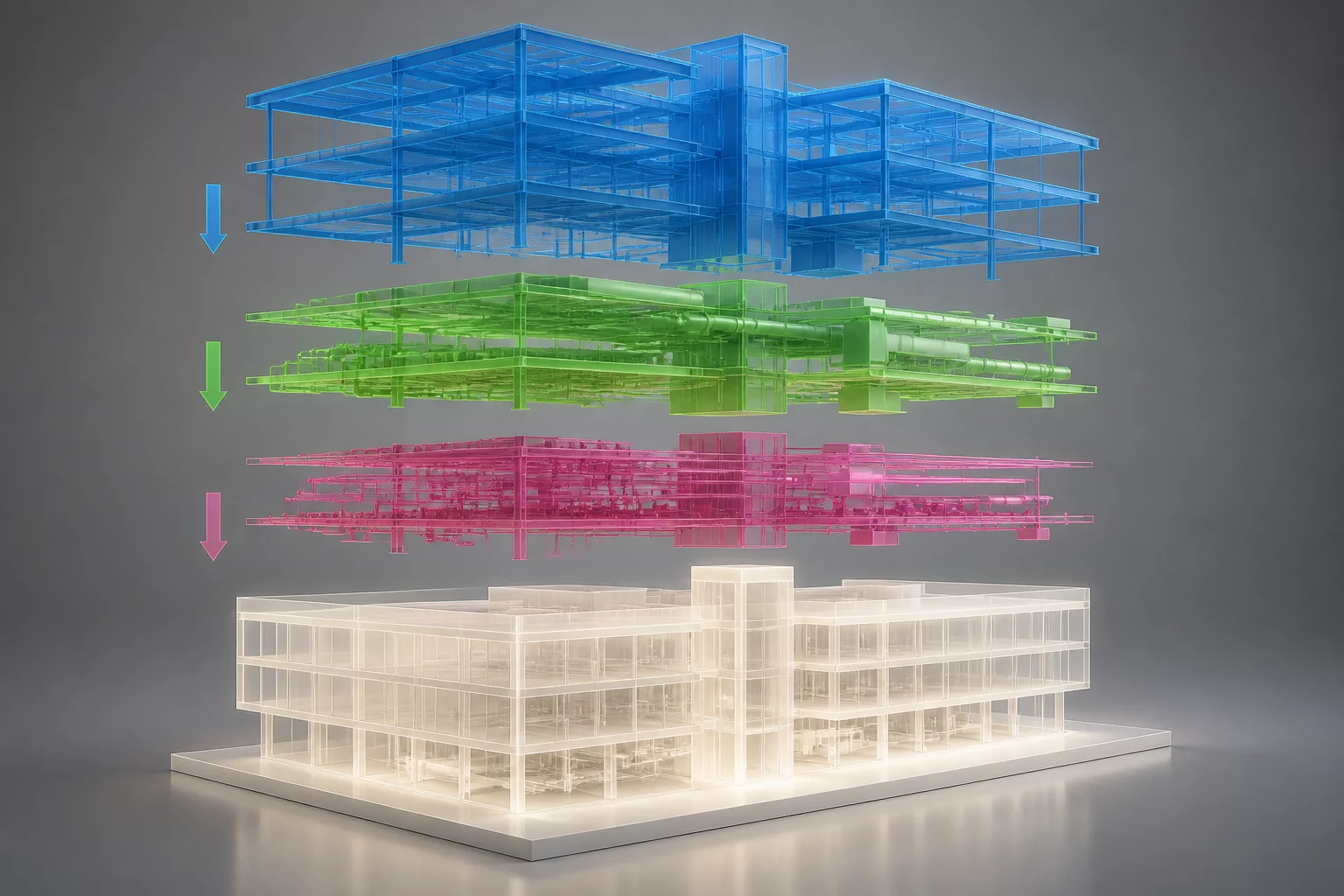
The Core Premise of the Principle
Coordination closure occurs only when every affected discipline verifies and integrates geometric and spatial modifications across their respective drawing sets. A simple written agreement or singular trade sign-off without synchronizing counterpart sheets creates an illusion of resolution that inevitably collapses in field execution.
Engineering Rule of Evidence
An issue requiring coordination across trades cannot be marked closed until the primary modification drawing and all dependent adjacent sheets exhibit matching revision geometry.
Root Causes for Ambiguous Approvals
The most frequent pitfall in drawing review workflows is unilateral closure, where one consultant resolves a comment on their specific sheet without confirming whether adjacent mechanical, electrical, or structural layouts accommodate the shift.
- Disconnected discipline review cycles leading to silent geometry shifts in electrical and plumbing models.
- Premature closure status stamps applied before overlaying counterpart discipline PDFs in Revu Studio.
- Missing cross-sheet callouts that leave field superintendents navigating contradictory revision dates.
Mandated Resolution Steps
Achieving definitive coordination closure requires a sequential four-tier validation chain before any issue status shifts to closed.
Markup Identification
Tag all disciplines impacted by the clash in the markup metadata rather than assigning a single individual.
Cross-Discipline Check
Conduct digital overlay comparisons in Bluebeam Revu 21.10 between structural, MEP, and architectural exports.
Visual Confirmation
Confirm visual delta clouds exist simultaneously on all corresponding sheet revisions.
Permanent Sign-off
Collect cryptographic digital signatures from all discipline leads before locking the markup status.
Failure at any stage of this chain resets the review cycle, preventing isolated trade assumptions from escaping into construction documentation.
Regulatory & Field Governance Alignment
Modern digital delivery standards, including MasterFormat 2026 and AIA digital contract provisions, establish strict liability around uncoordinated drawing releases.
AIA & OSHA Document Rule Alignment
Regulatory mandates stipulate that all digital submittals must provide complete provenance for multi-discipline clash resolutions. Stamping an RFI or markup as resolved without attached multi-trade revision clouds violates digital audit standards under active 2026 guidelines.
Adhering to unified coordination protocols ensures drawing archives withstand rigorous forensic audits during construction disputes.
Frequently Challenged Verification Scenarios
Placing a revision cloud without altering the underlying vector geometry constitutes an invalid revision. QA auditors must reject the status change and flag the annotation for corrective reissuance.
Multi-discipline clashes must feature shared tracking IDs in Revu 21.10, requiring concurrent status approvals from each responsible discipline lead before the item registers as closed.
Artificial intelligence summaries generated in Revu Max can flag potential conflicts and draft summaries, but statutory governance strictly prohibits AI from substituting registered engineer digital signatures.
Kevin H.
Lead AuditorCoordination is always the hardest part.