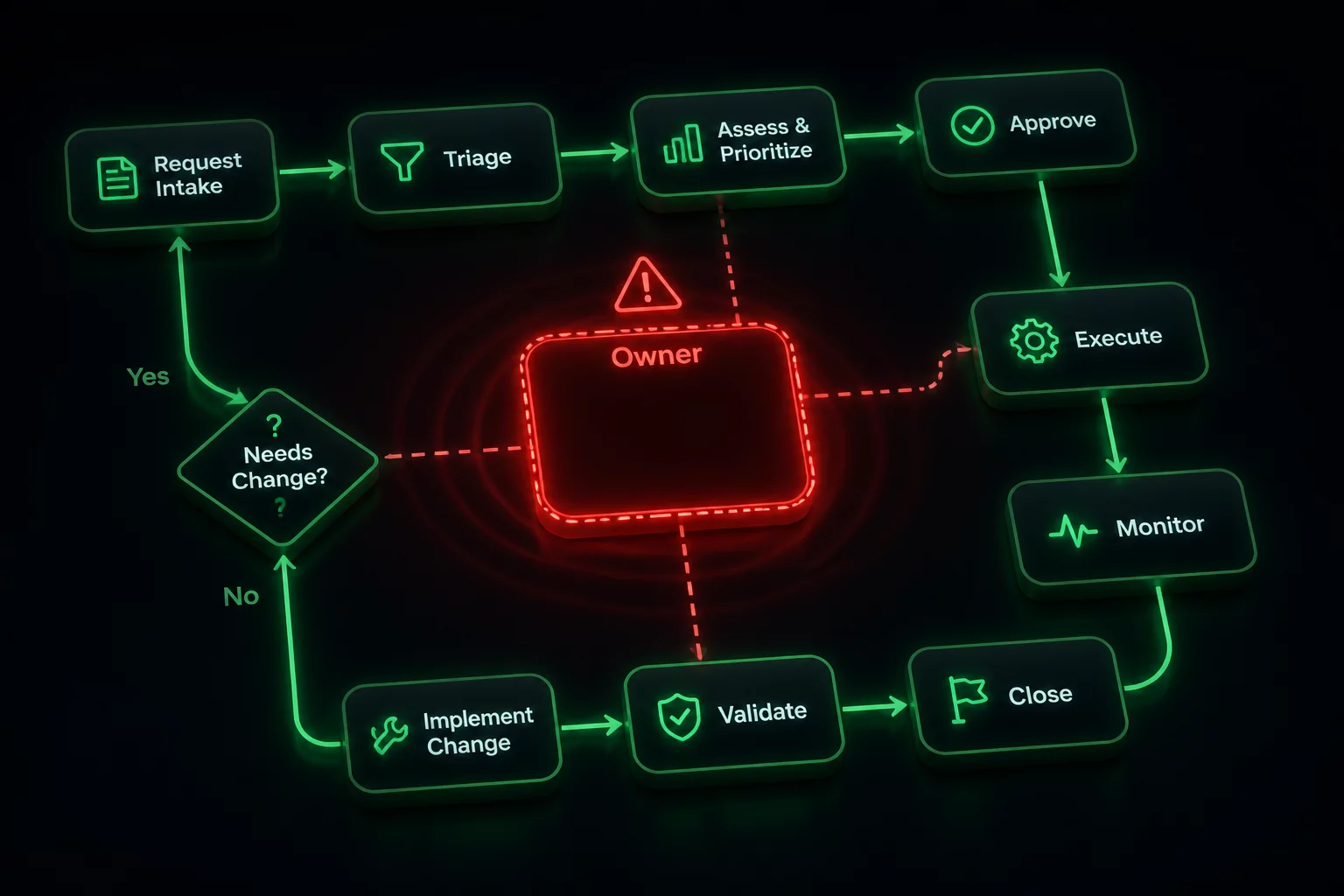
The Core Premise of the Principle
Ownership gaps represent the single most prevalent point of operational failure during complex architectural and engineering plan reviews. When an issue is logged without an explicit, singular responsible party, project participants naturally assume another discipline will handle the delta. This diffusion of responsibility leaves critical geometric and specification conflicts unaddressed between revision cycles, resulting in unverified field assumptions and expensive constructability clashes.
Engineering Rule of Evidence
Every markup, request for information, and review comment must possess exactly one designated Primary Closure Owner before status migration can occur. Shared or collective ownership is treated as zero ownership in strict quality audits.
Root Causes for Ambiguous Approvals
In high-density drawing packages, ambiguous approvals occur when subconsultants rely on informal communications or incomplete markups rather than standardized assignment states. When review comments fall into the interface zone between structural framing, mechanical routing, and architectural finishes, each team assumes the scope belongs to the adjacent party.
- Discipline ambiguity where notes span trade boundaries without an explicit primary author or assigned resolver.
- Unassigned generic markup tags left in collaborative sessions without designated reviewer ownership or accountability.
- Silent handoffs occurring during file transfers without formal acknowledgment or digital status transitions in Revu.
Mandated Resolution Steps
Resolving ownership gaps requires a formalized four-phase protocol embedded directly into the project's digital review management toolchain. Project managers and lead auditors enforce these sequential gates prior to publishing delta packages.
Markup Identification
Audit all open markup entries in Bluebeam Revu 21.10 and flag items lacking designated discipline leads or assigned author IDs.
Cross-Discipline Check
Convene joint coordination syncs between architectural, structural, and MEP leads to determine single-point signoff duty.
Visual Confirmation
Verify that physical drawing geometry changes align with the designated engineer's calculation sheets and revision clouds.
Permanent Sign-off
Execute cryptographic digital signature seals in accordance with project audit specifications and lock markup rows permanently.
By cementing these four verification steps into every review cycle, project teams eliminate orphan comments and establish unyielding audit trails that withstand forensic scrutiny.
Regulatory & Field Governance Alignment
Digital building governance mandates strict record-keeping under modern legal and regulatory frameworks. Paper trails and ambiguous markups no longer satisfy compliance obligations during onsite inspections or post-construction claims.
AIA & OSHA Document Rule Alignment
With the cessation of AIA paper form reprints and OSHA requirements for instantaneous digital access to verified safety calculations, document controllers must maintain an unbroken chain of custody. Every design alteration touching structural stability or life safety egress demands an identifiable licensed professional in the metadata record.
Adhering to MasterFormat 2026 classification guidelines guarantees that specification updates correlate directly with drawing revisions, preventing discrepancies between contract documents and field installations.
Frequently Challenged Verification Scenarios
Placing a revision cloud without an actual change in the underlying drawing geometry creates a phantom revision state. The auditor must reject closure immediately and mandate that the author either supply the verified CAD/BIM modification or remove the misleading cloud markup.
Multi-trade conflicts must be broken into linked child issues or assigned to a single Lead Coordinating Discipline (such as the Structural Engineer of Record for penetrations) who coordinates sub-responses prior to issuing a consolidated status closure.
No. While AI summarization tools assist in detecting unassigned comments and categorizing discipline topics, contractual and statutory standards strictly demand human professional engineer or architect certification via cryptographically validated digital signatures.
No verification notes yet. Be the first to record a peer audit observation.